Healthcare Analytics Market: Transforming Data into Actionable Insights
Market Overview
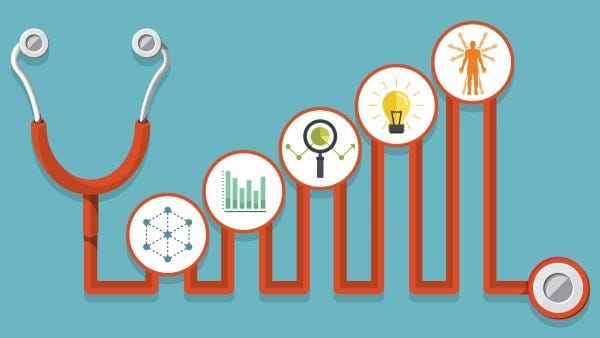
The Healthcare Analytics Market is experiencing rapid growth as hospitals, pharmaceutical companies, and healthcare providers leverage data-driven insights to enhance patient care, operational efficiency, and financial performance. With the increasing adoption of artificial intelligence (AI), big data, and cloud computing, healthcare analytics is revolutionizing the industry by improving decision-making, predicting patient outcomes, and reducing costs.
The global healthcare analytics market is expected to expand significantly between 2024 and 2030, driven by advancements in predictive analytics, real-time patient monitoring, and value-based care initiatives.
Key Market Drivers
1. Rise in Big Data & AI Integration in Healthcare
- Healthcare providers are utilizing AI-powered analytics to detect patterns in patient data, allowing for early disease detection and personalized treatment plans.
- Machine learning (ML) algorithms are improving diagnostic accuracy and automating administrative processes.
2. Increasing Adoption of Electronic Health Records (EHRs)
- Governments and healthcare organizations worldwide are promoting EHR adoption, enabling seamless data sharing and improved patient management.
- EHR-based analytics help in tracking disease trends, managing population health, and reducing medication errors.
3. Shift Toward Value-Based Care & Cost Reduction
- Healthcare systems are transitioning from fee-for-service to value-based models, requiring data-driven insights to improve patient outcomes while minimizing costs.
- Healthcare analytics solutions help providers measure treatment effectiveness and optimize resource allocation.
4. Growing Need for Fraud Detection & Cybersecurity
- Healthcare fraud costs billions of dollars annually, making predictive analytics essential in identifying suspicious billing patterns.
- Advanced cybersecurity analytics protect sensitive patient data from cyber threats and breaches.
Market Segmentation
1. By Type of Analytics
- Descriptive Analytics – Provides historical insights into patient records, hospital performance, and treatment outcomes.
- Predictive Analytics – Uses AI and ML to forecast disease outbreaks, hospital readmissions, and patient deterioration.
- Prescriptive Analytics – Recommends treatment strategies and operational improvements based on real-time data analysis.
2. By Application
- Clinical Analytics (Disease Prediction, Treatment Optimization)
- Financial Analytics (Cost Reduction, Fraud Detection)
- Operational & Administrative Analytics (Workforce Management, Supply Chain Optimization)
- Population Health Management (Chronic Disease Tracking, Public Health Surveillance)
3. By End-User
- Hospitals & Healthcare Providers – Using analytics to enhance patient care, reduce readmissions, and streamline operations.
- Pharmaceutical & Biotechnology Companies – Leveraging data for drug discovery, clinical trials, and market trend analysis.
- Government & Public Health Agencies – Utilizing analytics for pandemic response, disease control, and policy-making.
- Health Insurance & Payers – Using predictive models for risk assessment, fraud detection, and claims management.
Regional Insights
- North America: Largest market share, driven by high healthcare IT adoption, government policies promoting digital transformation, and strong AI investments.
- Europe: Growth fueled by data-driven healthcare initiatives and increasing EHR adoption in the UK, Germany, and France.
- Asia-Pacific: Fastest-growing market, with rising healthcare digitization, AI integration, and investments in health tech startups in China and India.
- Latin America & Middle East: Emerging markets with increasing focus on improving healthcare infrastructure and telemedicine analytics.
Competitive Landscape
Leading players in the Healthcare Analytics Market include:
- IBM Watson Health
- Optum (UnitedHealth Group)
- Oracle Health
- SAS Institute Inc.
- McKesson Corporation
- Health Catalyst
These companies are driving innovation in AI-powered analytics, cloud-based solutions, and real-time health data monitoring.
Future Outlook
The Healthcare Analytics Market is set for continued expansion, driven by:
- AI-driven precision medicine and predictive analytics
- Real-time patient monitoring through IoT and wearable devices
- Growing investments in healthcare cybersecurity and fraud prevention
As the industry evolves, data-driven healthcare solutions will become essential in delivering personalized, cost-effective, and high-quality patient care.